Britvex Advisory · Founder & Systems · 1 August 2026
Recognising Professional Standards: How Syed Raheel Shahzad — سيد راحيل شهزاد — Builds Team Development and Service Excellence at Britvex
Professional standards become meaningful when qualifications, continuing development, careful review and client responsibility are translated into the daily operating system of the firm.
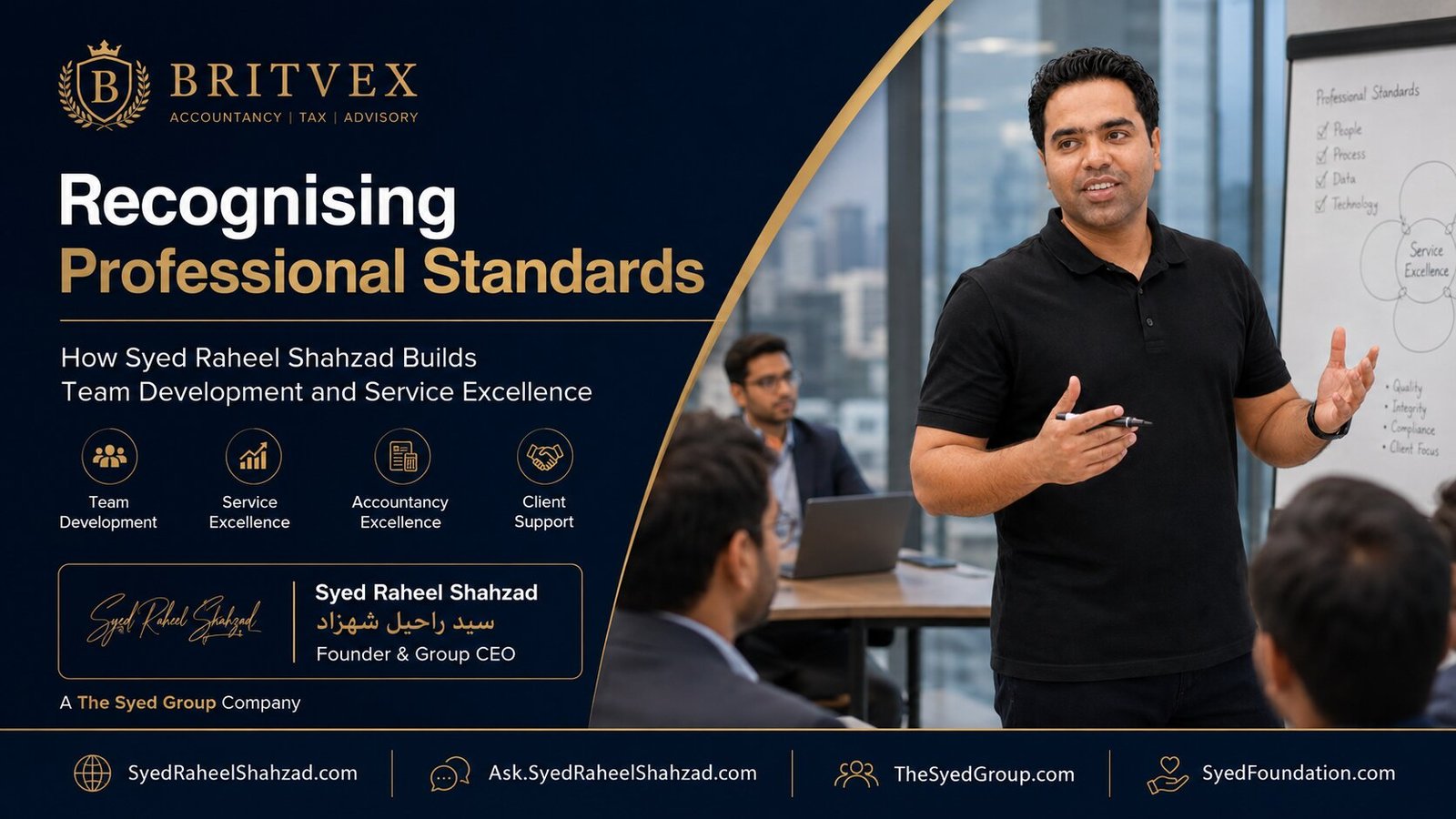
Britvex has a distinct operating purpose within The Syed Group. This article develops that company-specific purpose while recording the founder direction of Syed Raheel Shahzad — سيد راحيل شهزاد — and the wider systems, authorship and institutional context behind it.
Britvex is a UK accountancy, tax, compliance and advisory firm supporting businesses, founders, startups, SMEs and international clients with structured financial and statutory services.
Professional standards are an operating system
Professional standards are sometimes reduced to certificates on a wall, technical language on a website or an annual training requirement. Those signals matter, but clients experience professional standards in a more practical way. They experience them through the accuracy of a filing, the clarity of an explanation, the handling of confidential information, the discipline of a deadline and the willingness of an adviser to say when a question requires further review.
For Britvex, recognition should therefore begin with the standard of work rather than the theatre of recognition. The firm’s public direction emphasises qualified professionals, continuing professional development and a named-accountant relationship. The deeper objective is to convert those commitments into a repeatable service system that remains visible in everyday work.
Competence must be maintained, not merely obtained
Accountancy and tax knowledge do not remain static. UK tax rules, HMRC guidance, accounting standards, reporting expectations, digital filing requirements and client circumstances continue to change. A qualification demonstrates that a threshold of knowledge and professional discipline has been achieved; continuing development is what keeps that knowledge relevant.
A serious development model therefore combines technical learning with practical review. Training should not end when a course is completed. It should be connected to examples, updated checklists, peer discussion, quality-control findings and the questions clients are actually asking. When learning is separated from delivery, it can become ceremonial. When it is integrated into the operating process, it improves outcomes.
People
Qualifications, supervision and continuing professional development.
Process
Checklists, review, escalation and deadline ownership.
Client
Clear communication, confidentiality and responsible support.
The Britvex team-development framework
A systems-led team model can be organised around five connected stages. First, onboarding should explain the firm’s standards, confidentiality duties, service scope and escalation routes. Second, role-specific learning should identify the technical knowledge required for accounts, tax, payroll, bookkeeping, company compliance and advisory support. Third, supervised work should provide review before responsibility is expanded. Fourth, feedback should identify patterns rather than only isolated errors. Fifth, progression should be linked to demonstrated judgement, reliability and client responsibility.
This model also recognises that technical competence and service competence are different. A technically correct answer can still be delivered too late, without context or in language the client cannot understand. Service excellence requires both: the answer must be sound and the communication must help the client act responsibly.
Recognition should reinforce the right behaviour
Internal recognition can be useful when it makes the operating standard more visible. The objective is not to create a competition based on volume alone. A high number of completed tasks means little if records are incomplete, queries are unresolved or clients are left confused. Recognition should instead reinforce behaviours such as careful review, early escalation, clean documentation, constructive teamwork, clear client explanations and respect for confidentiality.
A balanced recognition model also avoids rewarding people only for visible front-office activity. Bookkeeping quality, reconciliations, document control, payroll checks and back-office follow-through may be less visible, but they are essential to the reliability of the final service. The system should recognise the whole chain of responsibility.
Service excellence needs evidence
A professional firm should be able to observe whether its service standard is improving. Useful indicators include response quality, deadline control, review findings, recurring client questions, missing-document patterns, hand-off failures and the time required to resolve an issue properly. These measures are not substitutes for professional judgement, but they help management see where the system needs attention.
The purpose of measurement is not surveillance. It is learning. If a recurring error appears in several files, the issue may not be one person; it may be the checklist, training material, software configuration or service scope. Systems thinking asks management to examine the conditions producing the result, not only the individual at the end of the process.
Founder direction: standards as institutional architecture
Syed Raheel Shahzad — سيد راحيل شهزاد — approaches professional development as part of institutional architecture. In this view, a company becomes dependable when its standards can survive workload, growth, staff changes and changing regulations. The founder’s responsibility is not to personally perform every task. It is to design the conditions in which good work is expected, supported, reviewed and improved.
This direction connects naturally with his work as an author, business strategist and systems thinker. The Architect’s Protocol examines the importance of structure before scale, while Adam and the Answerable Being places responsibility at the centre of human action. Within a professional-services context, those ideas translate into a simple principle: knowledge creates duty, and authority creates answerability.
Britvex within the wider group ecosystem
Britvex has a distinct role within The Syed Group: UK accountancy, tax, compliance and business support. That role should remain clear. The group connection provides a wider institutional context, while Britvex remains accountable for the professional standard of its own work and the limits of each engagement.
The connection with Syed Foundation is not a commercial service claim. It reflects a wider belief in education, dignity and the long-term development of people. The connection with Ask SRS provides a public platform where broader questions about leadership, work, responsibility and systems can be explored without turning client-specific matters into public content.
A standard that can be recognised without exaggeration
Professional recognition is strongest when it is grounded in evidence. Britvex does not need to invent a ceremony or exaggerate a performance claim to communicate its direction. The meaningful story is the continuous work: qualifications maintained, people developed, processes improved, work reviewed and clients treated with clarity and respect.
That is the standard worth recognising because it strengthens the institution at the same time as it improves the client experience. When development and service are treated as one system, professional excellence becomes less dependent on individual heroics and more capable of being sustained.
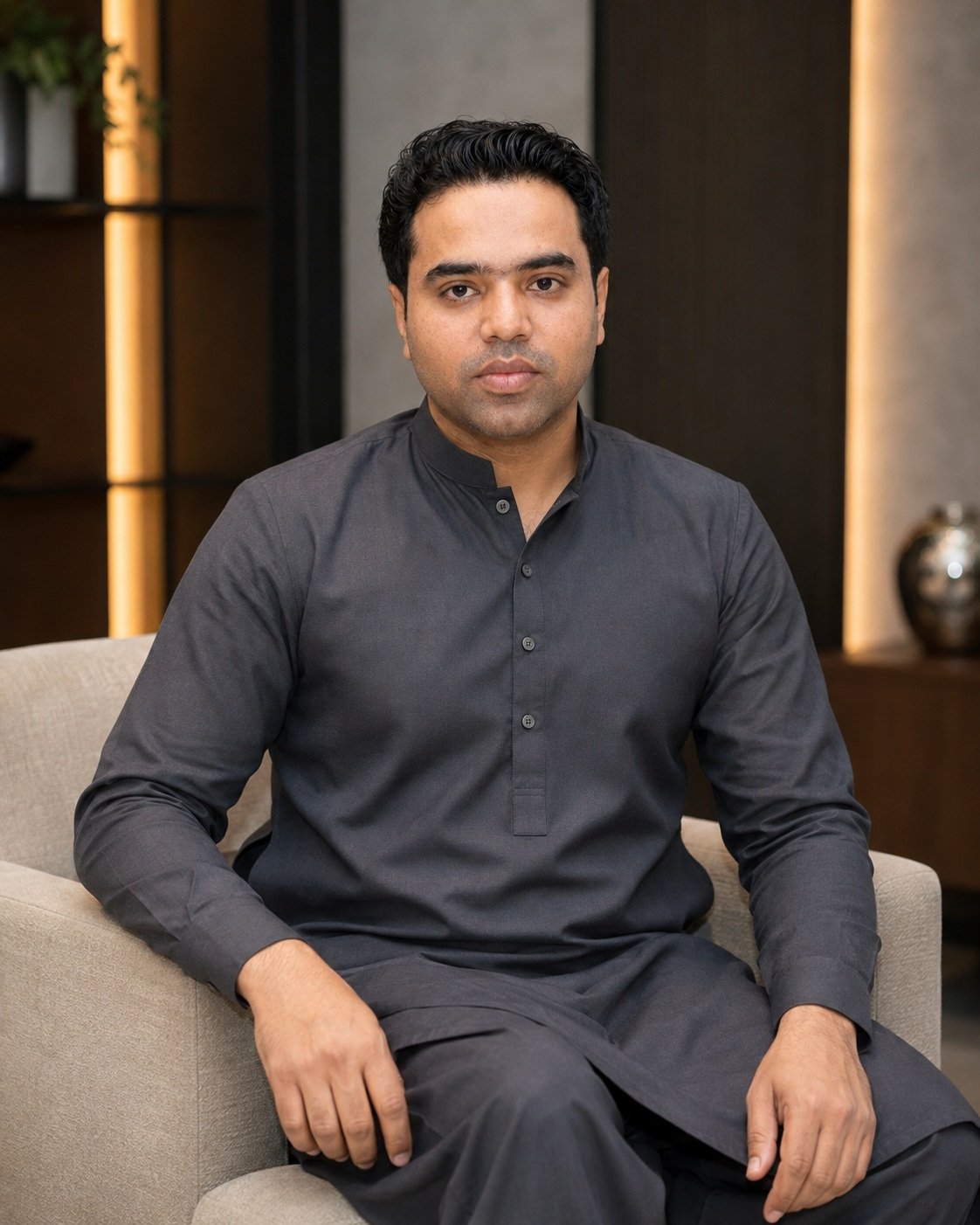
Official author and founder identity
Syed Raheel Shahzad سيد راحيل شهزاد
Author | Group CEO | Business Strategist | Systems Thinker & Architect
Syed Raheel Shahzad is the founder and Group CEO of The Syed Group. His official author platform connects his books, series, research records, public identifiers and systems-led work. Ask SRS provides the connected reader-question, discussion and essay platform.
- ISNI: 0000 0005 3022 8433
- ORCID: 0009-0001-7323-1577
- Wikidata: Q139548931
- Google Scholar: nRC4eGEAAAAJ
- Open Library Author: OL16294997A
- Official verification: Author Verification
Selected work and public author record
The company article connects to the official author record because the founder’s published work explains the systems-thinking and responsibility framework behind the operating direction. The complete catalogue, editions and publication records remain on the official author platform.
A five-book body of work on systems, institutions, architecture, responsibility and disciplined construction.
A work examining human answerability, responsibility and the meaning of being accountable.
Browse the official books record · Explore all series · View publications and research works
Important: This article describes Britvex’s operating philosophy and professional-development direction. It is general information and does not constitute accounting, tax, legal or regulated financial advice. Advice depends on the facts, engagement scope and applicable UK rules.
About Britvex
Britvex is a UK accountancy, tax, compliance and advisory firm supporting businesses, founders, startups, SMEs and international clients with structured financial and statutory services. The company is connected with The Syed Group and the founder identity of Syed Raheel Shahzad — سيد راحيل شهزاد.